
Access Denied
IMPORTANT! If you’re a store owner, please make sure you have Customer accounts enabled in your Store Admin, as you have customer based locks set up with EasyLockdown app. Enable Customer Accounts
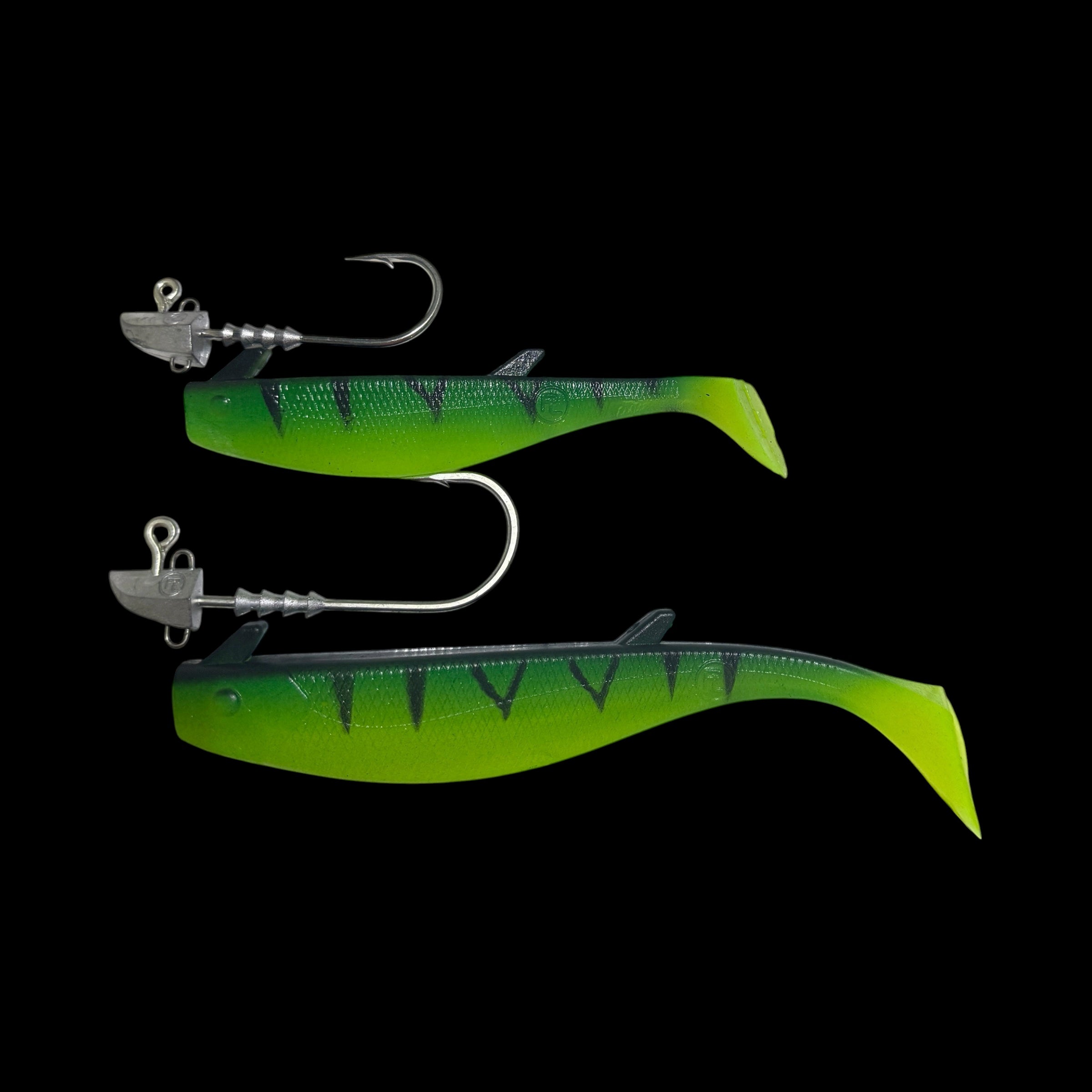
RIGGING GUIDE | So where does 3/4oz fit?
When Should You Use a 3/4oz Jig Head?
Filling a handy lil gap in the Jig Head Weights : 3/4oz
We’ve got them in:
7/0 : for our 6-inch plastics
9/0 : for our 8-inch plastics
Choosing a jig head isn't always as simple as deep water = heavier jig head.
Depth matters. Current matters. Wind matters. The size of your plastic matters. And probably most importantly, where the fish are actually sitting matters.
So where does 3/4oz fit?
I think of 3/4oz as that really handy middle ground. You might have a lighter jig head tied on and you're just not quite getting your plastic down where you want it. But you also don't necessarily need to jump straight to something really heavy.
That's where I'd start looking at the 3/4oz.
It gives you that little bit of extra weight to get your plastic down quicker and keep better contact with it, without completely changing the way you're fishing.
When the fish are sitting deeper
This is probably the obvious one. If the fish are sitting deeper in the water column, you want your plastic spending as much of the cast as possible where the fish actually are.
There's not much point making the perfect cast if half your retrieve is spent waiting for the plastic to finally get down into the zone. Going up to a 3/4oz can help get it there quicker.
This can be really handy fishing things like deeper points, creek mouths, drop-offs, weed edges, timber, rock bars and submerged structure.
Cast. Let it sink. Get it into the zone. Then start working it.
Current can change everything
You can fish a spot one day with hardly any water moving and your setup feels perfect. Come back another day with some current running and suddenly that exact same setup feels completely different.
Your line is getting pushed around, your plastic is riding higher and you're struggling to feel what's happening. Sometimes that little jump in weight is all you need.
A 3/4oz can help you get down, maintain your depth and keep better contact with your plastic when you've got water moving. And for me, that last bit is a big one.
I want to know what my lure is doing.
And then there's the wind...
We've all had those days. 😂 You're trying to put a cast exactly where you want it and the wind has other ideas. Or you've got a massive bow in your line and you can't feel a bloody thing.
Going a little heavier can help.
It's not necessarily because you need to fish deeper. Sometimes you simply want a bit more control over what you're doing.
Our 3/4oz 7/0 is suited to the 6-inch Pro Lates plastics.
And I reckon this is a really handy combination to have. Because sometimes you want a smaller plastic, but that doesn't necessarily mean you want a light jig head.
Maybe the fish are deeper. Maybe you've got some current. Maybe it's blowing. Or maybe they're eating that smaller profile but you still need to get the bloody thing down to them.
That's where the 3/4oz 7/0 comes into its own.
You've still got that smaller 6 inch presentation, but now you've got some weight behind it to get it down and give you more control.
Small plastic doesn't always have to mean light.
Then we've got the bigger brother.
The 3/4oz 9/0 is suited to our 8 inch plastics.
Same 3/4oz weight, but with the longer hook to suit the bigger plastic. I'd be looking at this combination when you want that larger 8 inch profile but don't necessarily want to jump to a really heavy jig head.
Think deeper edges, structure, current or anywhere you want that bigger plastic down through the water column. And remember, an 8 inch plastic creates more resistance in the water than a 6 inch. So even though both setups have a 3/4oz jig head, they're not necessarily going to feel or sink exactly the same.
What depth should you use 3/4oz in?
This is probably where everyone wants me to give them a nice little number.
And annoyingly, There isn't one. 😂
I don't really love saying: “You're fishing X metres, so you need X weight.”
There are too many other things going on. You could fish the exact same spot at the exact same depth on two different days and need a completely different jig head.
Five metres of dead calm water with no current is very different to five metres with current running, wind blowing and your boat moving around. So yes, look at depth. But also pay attention to what your lure is telling you.
Can you feel it?
Is it getting down?
Is it staying in the zone?
Is the current pushing it up?
Are you spending half the cast waiting for it to sink?
Those things will tell you a lot.
Don't forget about sink rate
Fish aren't always sitting hard on the bottom either. Sometimes they're suspended. You might cast out, give your plastic a count and start your retrieve once you've reached roughly the depth they're sitting.
If you start getting hits after a similar count each time, you've suddenly learnt something pretty handy. That's where getting to know how your different plastic and jig head combinations sink can make a big difference.
When should you go lighter or heavier?
If you're fishing really shallow, trying to stay above weed, wanting a slower sink or more hang time, I'd probably be looking lighter.
If you've got serious depth, hard running current, you're fishing vertically or simply can't get down quickly enough, go heavier.
The 3/4oz isn't supposed to replace everything else in the tackle box.
It's just another option.
Fishing 6-inch plastics? → 3/4oz 7/0
Fishing 8-inch plastics? → 3/4oz 9/0
Then let the depth, current, wind and fish tell you whether 3/4oz is the right weight for that particular day. Because sometimes you don't need another colour.
You don't need another plastic. You don't need to completely change what you're doing.
Sometimes you just need to change the weight.
Trace :)
Invalid password
Enter